Trump's Iran War Address: Claims, Contradictions, and What He Left Unsaid
A full breakdown of Trump's first primetime address since the start of the Iran war — what he said, what the facts show, what was missing, and what markets and allies made of it.
StoryRendered14 min read
The Speech That Answered Nothing
On the night of April 1, 2026 — Day 33 of America's war with Iran — President Donald Trump addressed the nation from the White House in his first formal primetime address since the conflict began on February 28.
It lasted under 20 minutes. By the time it ended, oil prices had jumped 4 percent, Asian markets were in retreat, and analysts from left and right were struggling to identify a single new piece of information Trump had disclosed.
This is the complete record of what was said, what the facts show, and what Trump chose not to address.
🎙️
19 min
Speech Duration
⚔️
Day 33
Of The War
🎖️
13
U.S. Casualties
📉
28%
Public Support
💰
+4%
Oil Price Spike
In the Room: The White House Audience
The in-person crowd at the White House included a who's who of the Trump administration's national security apparatus:
Vice President JD Vance
Secretary of State Marco Rubio
Secretary of Defense Pete Hegseth
Attorney General Pam Bondi
White House Press Secretary Karoline Leavitt
General Dan Caine, Chairman of the Joint Chiefs of Staff
The assembled officials underscored the speech's intent: to project unified resolve at a moment when public support for the war had begun to crack.
"Operation Epic Fury": What Trump Claimed Was Achieved
Trump framed the operation — officially named Operation Epic Fury — as a swift, decisive campaign against what he called "the world's number one state sponsor of terror."
In his words:
Tonight, Iran's navy is GONE. Their air force is in ruins. Their leaders, most of them — the terrorist regime they led — are now dead. Their command and control of the Islamic Revolutionary Guard Corps is being decimated as we speak.
Trump described a U.S. military that had, in just one month, "delivered swift, overwhelming blows to the Iranian regime — decimating its navy, shattering its air force, eliminating its key terrorist leaders, and systematically dismantling its ability to threaten America, our allies, and the world."
The framing was one of near-total military success — a sharp contrast to the rising gas prices and falling poll numbers that had made the speech politically urgent.
Trump's Eight Key Claims — Examined
1. The War Is "Nearing Completion"
Trump announced that nearly all administration goals had been achieved and the war was "nearing completion." This framing was immediately complicated by his next claim.
2. A Threat to Escalate — "Stone Ages"
In the same speech in which he declared near-victory, Trump simultaneously promised significantly more strikes over the coming weeks:
We are going to hit them extremely hard over the next two to three weeks. We are going to bring them back to the stone ages, where they belong.
The tension between "nearing completion" and "two to three more weeks of extreme strikes" was not addressed.
3. Targeting Electricity and Oil Infrastructure
Trump escalated his threats, warning that if no deal is reached, the U.S. would strike Iran's entire power grid:
If there is no deal, we are going to hit each and every one of their electric generating plants very hard and probably simultaneously.
Such strikes would constitute a major escalation with significant civilian consequences under international humanitarian law — a dimension Trump did not address.
4. Regime Change — "We Never Said It, But It Happened"
Trump made a striking claim about regime change, a goal the administration had consistently denied pursuing:
We never said regime change, but regime change has occurred because of all of their original leaders' death — they're all dead. The new group is less radical and much more reasonable.
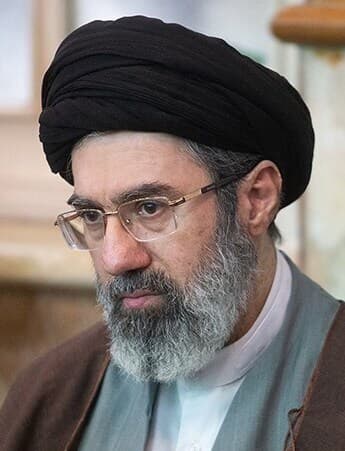
This claim was immediately problematic. Iranian officials had already selected Mojtaba Khamenei — the son of the slain Supreme Leader Ali Khamenei — as successor, suggesting direct continuity with the theocratic structure Trump claimed had been dismantled.
Mojtaba Khamenei — selected as Iran's new Supreme Leader, representing continuity with the Islamic Republic's theocratic structure rather than the 'less radical' new leadership Trump described.Wikimedia Commons · Public Domain
5. Nuclear Weapons — The Stated Justification
Trump framed the war as a response to the existential threat of a nuclear Iran, invoking 47 years of violence and calling nuclear weapons in Iranian hands "an intolerable threat."
Yet in a Reuters interview on the same day as the speech, Trump contradicted this framing entirely, saying he was not concerned about Iran's stockpile of enriched uranium: "That's so far underground, I don't care about that."
6. Blaming His Predecessors
Trump argued that previous U.S. presidents should have "handled" Iran before he took office — a recurring rhetorical move in the speech to frame the war as inherited necessity rather than choice.
7. The Strait of Hormuz — Allies' Problem
On the Strait of Hormuz, through which approximately 20 percent of the world's oil transits, Trump placed responsibility not on the U.S. but on dependent nations: countries that "rely heavily" on the strait "must take care of that passage." He added that when the conflict ends, "the strait will open up naturally."
8. Gas Prices — A Promise of Relief
Trump directly addressed rising domestic gas prices, promising they "will rapidly come back down" once the conflict ends. He offered no timeline or mechanism.
Contradictions & Fact Checks
🔴
Fact Check: The Nuclear Weapons Claim
Trump's own Director of National Intelligence, Tulsi Gabbard, told lawmakers that "Iran is not building a nuclear weapon." The U.S. intelligence community assessed last year that Iran does not have an active nuclear weapons program — the central stated justification for the war.
🔴
Fact Check: The USS Cole Bombing
Trump invoked the USS Cole bombing in 2000 as evidence of Iranian aggression. The bombing was carried out by al-Qaeda operatives with no known links to Iran. The 9/11 Commission Report and subsequent investigations confirmed this.
🔴
Fact Check: October 7 and Iran
Trump cited Iran's alleged role in Hamas's October 7, 2023 attack in southern Israel. There has been no evidence linking Iran to the direct planning or execution of the attack. While Iran has long supported Hamas financially, U.S. and Israeli intelligence have not established Iranian operational control of the October 7 operation.
🔴
Fact Check: Regime Change
Trump claimed Iran's "new group is less radical and much more reasonable." Iranian officials selected Mojtaba Khamenei — the son of the slain Supreme Leader — as successor before the speech was even delivered, directly contradicting Trump's characterization.
⚠️
Internal Contradiction: Victory vs. Escalation
Trump simultaneously claimed the war was "nearing completion" and promised to "hit them extremely hard over the next two to three weeks." Analysts and markets both interpreted the escalation rhetoric as the operative signal, driving oil prices up nearly 4 percent during and after the address.
What Was Missing
Military and foreign policy experts identified significant gaps — questions the speech never attempted to answer:
Key Questions Trump Did Not Address
Iran's enriched uranium stockpile — Iran retains a large stockpile of highly enriched uranium. Trump said in a Reuters interview hours earlier that he "doesn't care" about it. The speech ignored it entirely.
The Strait of Hormuz — Iran retains the physical capacity to threaten or close the strait. No plan for ensuring passage was presented.
Ongoing negotiations — There was "almost no mention of ongoing indirect negotiations, no mention of mediators — the Pakistanis, the Turks, the Egyptians — no sense that there was an opportunity in the two or three weeks that remain that there would be a diplomatic off-ramp." (Foreign policy analysts)
Ground troops — Trump "didn't rule it out, didn't rule it in." The question of ground deployment remains entirely open.
Who selects Iran's next leader — Trump had previously said the U.S. should have a role in selecting Iran's new leader. He did not mention this, perhaps because Iran had already made the selection without U.S. input.
The IRGC: What "Decimated" Actually Means
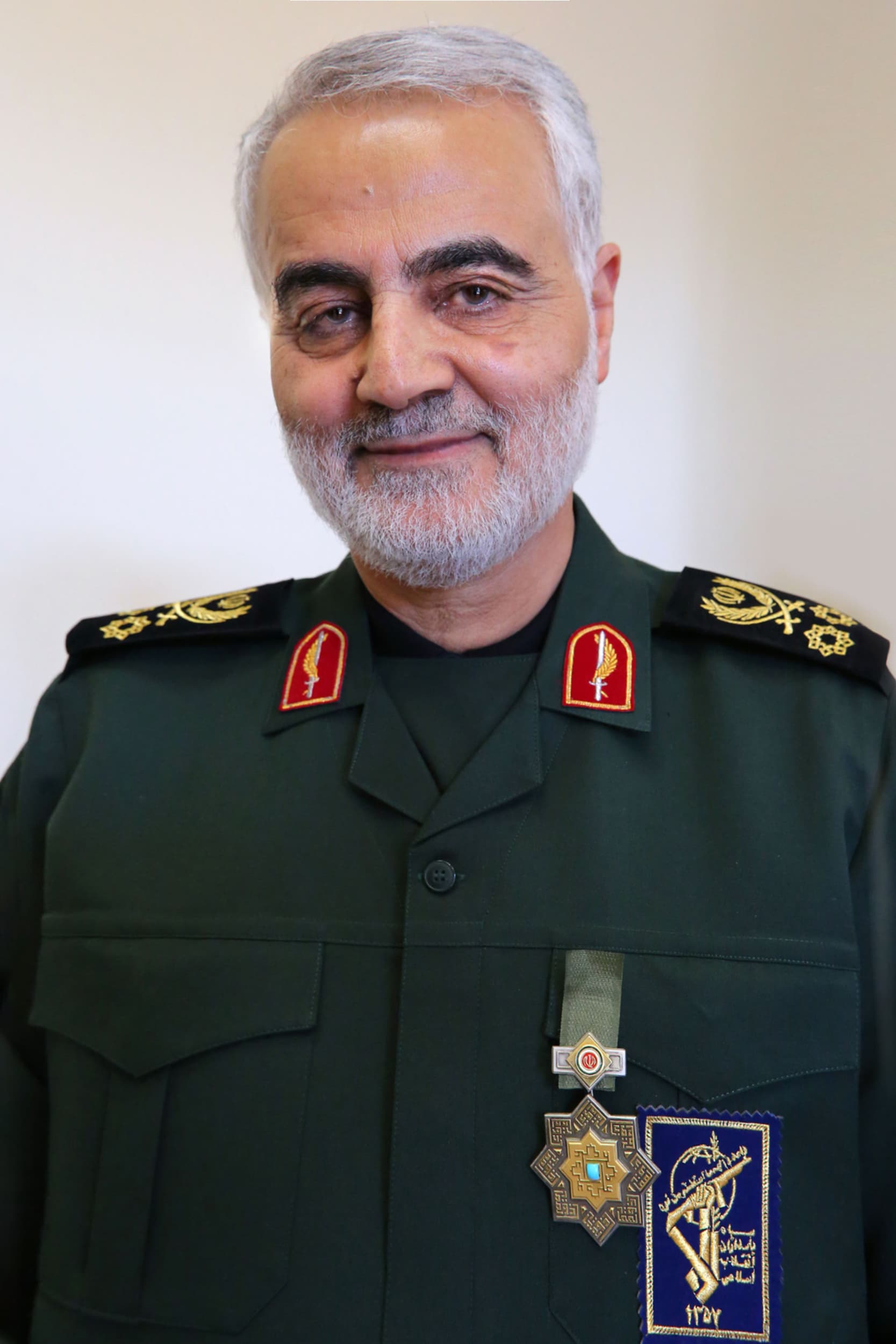
Qasem Soleimani — the IRGC Quds Force commander whose 2020 assassination under Trump prefigured the current campaign to eliminate Iran's military leadership. The IRGC's decentralized structure has historically allowed it to survive and regenerate after leadership losses.Wikimedia Commons · Public Domain
Trump's claim that the IRGC's "command and control is being decimated" echoes the stated rationale for the 2020 assassination of Qasem Soleimani — that decapitating IRGC leadership would degrade Iran's regional capabilities. The assessment since that assassination has been mixed at best: the IRGC's network proved highly resilient, with regional proxy operations largely continuing under replacement leadership.
Public Opinion: A War Without Support
The political urgency behind Trump's speech is visible in the polling data. Public support for the war has collapsed from its already-modest opening levels.
Support for the Iran War — YouGov Poll (April 2026)
Overall Public Support28%
Republican Support (April)61%
Republican Support (Early March)76%
Overall Public Opposition72%
Only 28 percent of respondents support the war overall. Among Republicans — the president's core base — support has fallen from 76 percent in early March to 61 percent, a 15-point collapse in weeks.
Political Reactions: A Divided Response
Democrats
Has there ever been a more rambling, disjointed, and pathetic presidential war speech? Trump is completely unfit to be Commander-in-Chief.
He has brought America into a war the people do not want. He has put American troops in harm's way, costs are rising by the day.
Trump Supporters
Pro-Israel commentator Mark Levin wrote "PERFECT SPEECH" on X. Secretary of State Marco Rubio applauded the address and reiterated the administration's stated objectives: destroying Iran's weapons factories, navy, air force, and terrorist infrastructure.
Expert Analysis: "He Really Does Not Have a Plan"
The assessments from independent analysts were unusually consistent in their skepticism.
I don't think that the speech had any point, and I failed to grasp what he was trying to do and convey. It was really a repetition of everything that he had said in the past.
I did not detect anything new. Essentially, it was a summary of all of the tweets he has issued over the last 30 days, almost in chronological order. But precisely because it does not appear to have anything new in it, it reveals that he really does not have a plan.
This is clearly a tactical success. Strategic success is often in the eye of the beholder. I think by conventional standards, we would have to say it's not a strategic success — if Iran retains its nuclear material, controls the Strait of Hormuz, and can still threaten U.S. allies.
Market Reaction: Traders Read It as "War Continues"
Markets interpreted the speech's escalatory rhetoric — not its victory framing — as the operative signal.
Market Reaction to Trump's April 1 Speech
Oil Price Increase4%
Nikkei 225 (Japan) Decline1.4%
Kospi (South Korea) Decline2.82%
Hang Seng (HK) Opening Decline0.5%
Oil prices jumped nearly 4 percent — traders betting that the war will not end quickly. Asia-Pacific markets reversed their gains on Thursday: Japan's Nikkei 225 fell 1.4%, South Korea's Kospi dropped 2.82%, and Hong Kong's Hang Seng opened 0.5% lower.
NATO: The Alliance Under Strain
The speech came against a backdrop of accelerating rupture between the U.S. and its European allies over the war. Trump told Britain's Telegraph that he is considering pulling out of NATO because European nations did not join the war in Iran. He told Reuters he is "absolutely" considering withdrawal.
The speech contained no direct address to NATO allies — a conspicuous absence given the magnitude of the implied threat.
⚠️
NATO Context
The U.S.-NATO alliance has operated under Article 5 — that an attack on one is an attack on all — for 77 years. No NATO ally has recognized Iran's actions as triggering a collective defense response, and several European governments have explicitly opposed the military campaign, creating an unprecedented fault line within the alliance.
The Human Cost: 13 Americans Dead
In perhaps the most somber moment of the speech, Trump acknowledged the American lives lost:
We honor the 13 American warriors who have laid down their lives in this fight to prevent our children from ever having to face a nuclear Iran.
The 13 casualties represent the official acknowledged U.S. death toll as of April 1. Iranian civilian and military casualties have not been independently verified.
Bottom Line
💡
What The Speech Actually Was
Trump's April 1 address was his first formal national address in 33 days of war. It lasted under 20 minutes. Rather than announcing a clear end, escalation plan, or diplomatic breakthrough, Trump restated his existing talking points — claiming near-victory while promising more strikes, threatening to destroy Iran's power grid while offering no diplomatic off-ramp, and declaring regime change while Iran installed the slain Supreme Leader's son as his replacement.
Markets, analysts, and allies all reached the same conclusion: the speech revealed not a plan, but the absence of one.
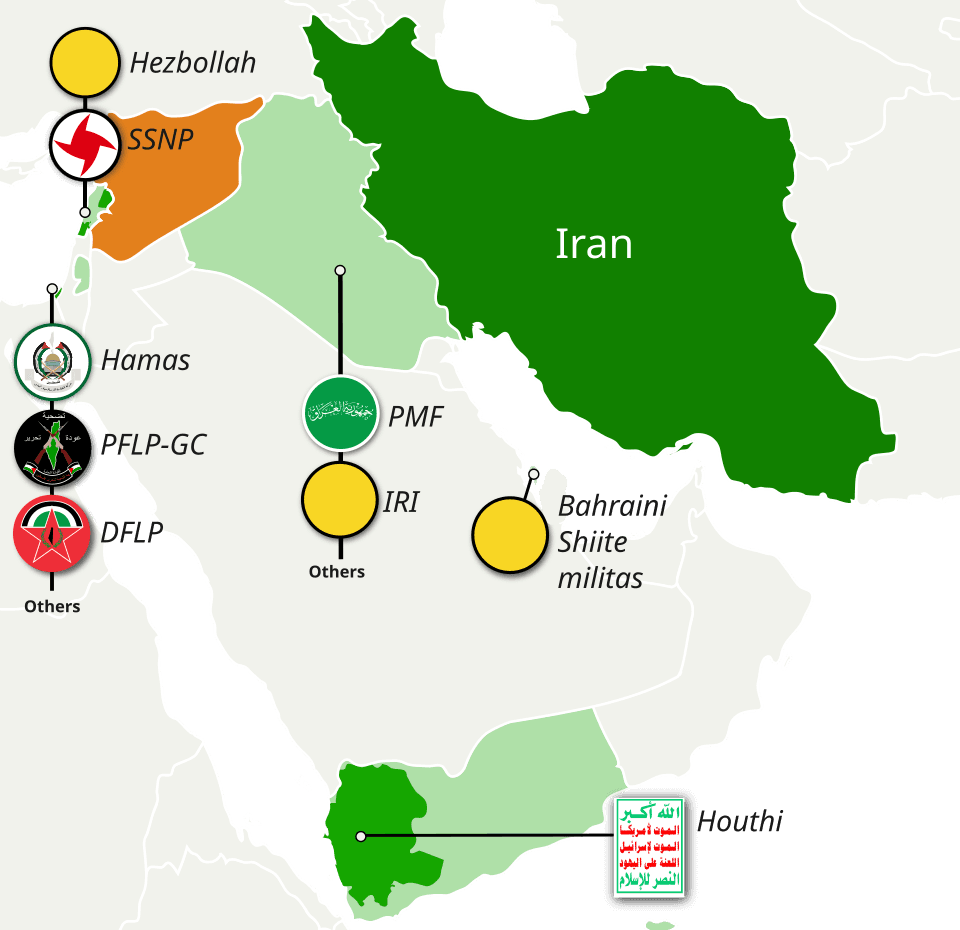 Axis of Resistance